
What are the characteristics of transverse cracks in wear-resistant alloy plates
Add time:2022-08-23
Wear-resistant alloy plates generally need to be hardened for wear resistance, and martensitic structures must be obtained on the surface and core. However, the microstructure transformation of the surface and the center of the wear-resistant alloy plate is not carried out at the same time. During quenching, the surface cools quickly, and the austenite to martensite transformation occurs first. When the surface martensite transformation is completed, the center begins to occur. Martensitic transformation. Due to the large specific volume of martensite, the formed structural stress forms tensile stress at the surface and compressive stress at the core. At the same time, due to the asynchrony of cooling, the thermal stress is the surface compressive stress and the core tensile stress.
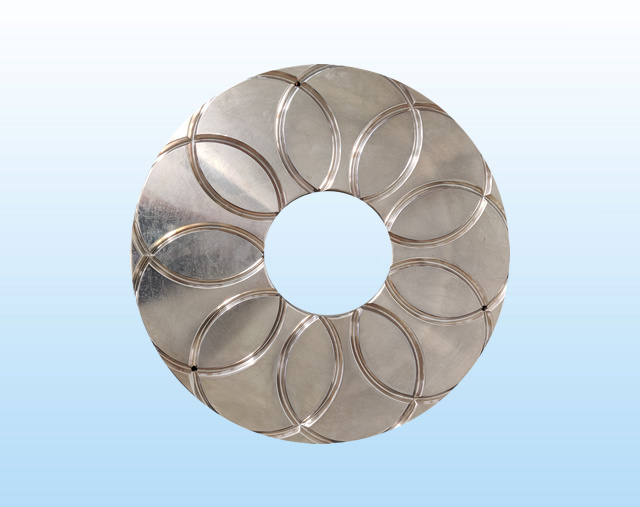
Cracks originate in the core and expand radially to the periphery. Most of these cracks occur in unhardened wear-resistant alloy plates. A stress peak forms at the interface of hardened and unhardened, where cracks originate. The characteristics of the internal stress that form this type of crack are the compressive stress on the surface of the wear-resistant alloy plate, which becomes tensile stress at a distance from the surface, and the peak value of the tensile stress is the axial stress. Such cracks are prone to occur during the quenching treatment of large metallurgical rolls.
Crusher,Wear,Plate,prices,Crusher,Wear,Plate,For,sale,Crusher,Wear,Plate,cost
Previous page
Next page
Recommended
2023-01-04
Contact Us
Address:Daxing Village, Daxing Korean Township, Yuhong District, Shenyang City
Hotline:024-89327066/89327333
Tel:13504016963
Email:gdzxsb@163.com
Fax:024-89327111
Web: www.gdzxsb.com.cn
Message
Please leave your valuable comments or suggestions and contact information (email or telephone), so that we can reply to you in time!
QR code

Scan QR code