
Principles that may lead to cracks in the use of taper sleeves
Add time:2022-09-27
The taper sleeve and the hollow eccentric shaft are not ground together. According to the maintenance regulations, the taper sleeve and the hollow eccentric shaft must be researched each other, but in actual work, because the research and combination are completely dependent on manpower, labor-intensive and time-consuming, they are often ignored. As a result, there may be a local gap between the two. When the impact load and load are large, cracks often appear in the taper sleeve where there is a gap.
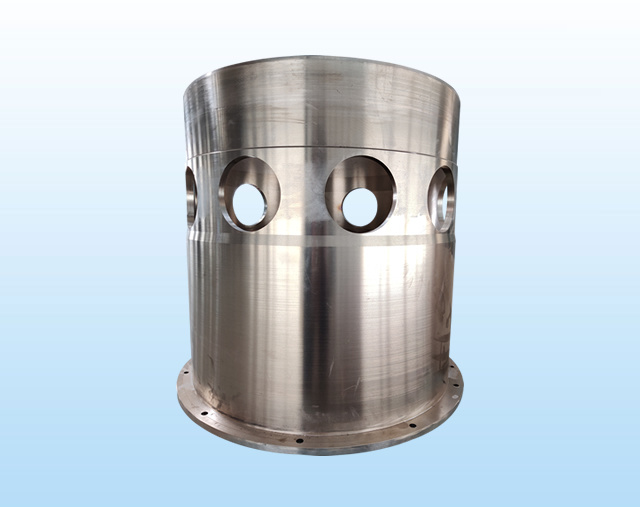
Influence of hot-injection zinc alloys. Zinc alloy is poured between the two planes of the cone sleeve and the two grooves of the eccentric shaft to prevent the movement of the cone sleeve. If the alloy does not fill all the gaps, it may cause the taper sleeve to dislocate with the eccentric sleeve when it is impacted and vibrated, including rotation and climbing. After the eccentric sleeve is displaced, there is a gap between the eccentric shaft and the eccentric shaft, which is extremely vulnerable to impact and cracks. In addition, the hot-injection zinc alloy is easy to deform the taper sleeve. If it is not checked and processed, the stress concentration of the protruding part will easily cause cracks.
The taper sleeve is too loose or too tight in the hollow eccentric shaft. When the cone sleeve is inserted into the hollow eccentric shaft, a special tool must be used to compress the two. If it is too loose, the taper sleeve will be easy to loosen; if it is too tight, stress will be generated inside the taper sleeve, which will protrude inward when affected by heat or other factors, thus causing cracks due to impact.
good,price,and,quality,Crusher,Bushing,Crusher,Bushing,on,sales
Previous page
Recommended
2023-01-04
Contact Us
Address:Daxing Village, Daxing Korean Township, Yuhong District, Shenyang City
Hotline:024-89327066/89327333
Tel:13504016963
Email:gdzxsb@163.com
Fax:024-89327111
Web: www.gdzxsb.com.cn
Message
Please leave your valuable comments or suggestions and contact information (email or telephone), so that we can reply to you in time!
QR code

Scan QR code